

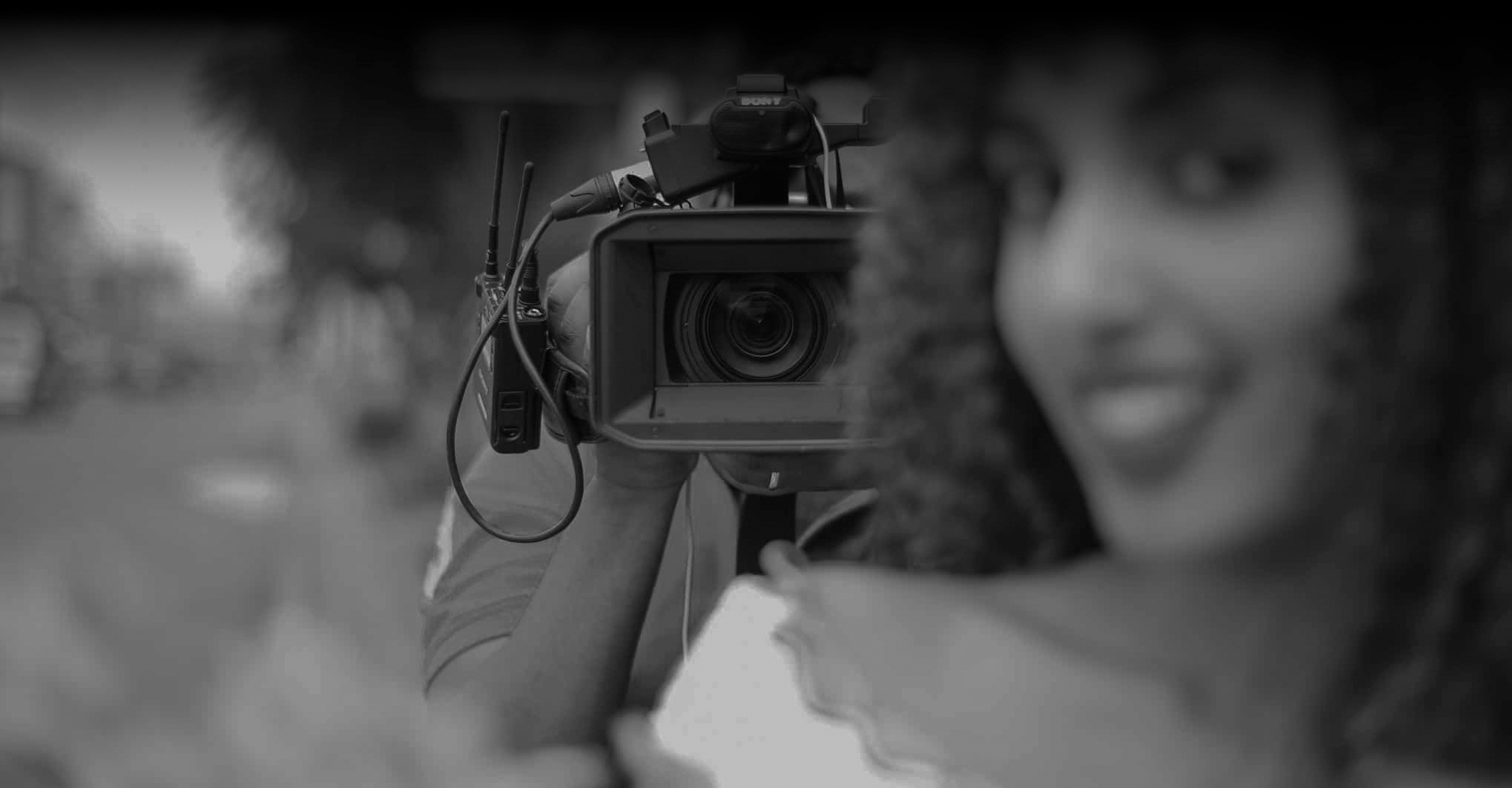
Inside you there is a talent that deserves light. Here you learn to ignite it, to illuminate it, to give it life, and to finally make it real.
There is a reason why cinema, when it is true, resembles life more than life itself.
Because it takes what is enigmatic and makes it understandable.
It takes what is invisible and turns it into an image.
It takes what is emotional and gives it form.
There is a moment, in life, when you feel that observing is no longer enough. It is the moment when the need is born to tell, to express what you carry inside, to give form to a world that only you are able to see. At DomasArt Film School that moment does not remain a suspended inspiration. It becomes a real, concrete, guided path, capable of transforming creative instinct into a craft and passion into a living expression. It becomes a real, guided, living path, in which art, technique and imagination intertwine until they become a craft. Art is not a concept: it is that magic, that inner madness made visible.
Here cinema is not a set of rules, it is emotion, vision, transformation. It is learning to build with precision, but also to feel with depth. And if you are reading these lines, perhaps it is because something inside you has already begun to move.
If you feel that the time has come to create and give voice to your dreams, here you find a school that does not promise shortcuts, but builds foundations. And it transforms passion into quality, quality into credibility, credibility into real possibilities.
Six training areas:
We have created six training areas designed to accompany you step by step, in a journey of great professionalism and depth: Acting, Writing, Directing, Art of Communication, Cinema Culture, Yogic Arts.
Acting:
Concrete work on truth, presence, voice, the body, and impact in front of the camera and the audience. Courses: Screen Acting, Acting, Voice Training for Actors, Acting Improvisation, Actor Coaching, Casting and Audition.
Writing:
Writing as an origin: finding your voice, giving structure to thought, transforming inspiration into a text that holds.
Courses: Creative Writing, Poetry, Screenwriting, Writing and Interpreting.
Directing:
Learning to dream, to see and to choose. Giving form to an idea, guiding actors, using framing and camera movements in order to fully express imagination.
Courses: Film Directing, Shots and Camera Movements, Artistic Filmmaking.
Art of Communication:
Communicating is an art that unites words, listening and body language, and much more. And today being a good communicator is fundamental.
Courses: Public Speaking, Communication Techniques, Improvising in Public, Voice Training.
Cinema Culture:
To truly understand what you do, you also need to know what has been, but above all to know in depth all the tools, nuances and details of how everything is created and made.
Courses: Cinematographic Criticism, History of Cinema.
Yogic Arts:
To make mind, body and our deepest part freer, more present, alive and stronger instruments even under pressure.
Courses: Concentration, Psychophysical Relaxation, Mindfulness, Authenticity, Drama Therapy, Coaching and Personal Development.
Personalized Private Courses:
Alongside group courses, there is also a tailor made work created for very demanding students, through private lessons: no rigid program, but a journey shaped around your goals and your level. Where work of great depth and precision will be carried out.
Certificate, opportunities, transparency:
At the end of the course, each student will be issued a certificate by DomasArt Film School. The most deserving students will be considered for future projects of DomasArt Film Production. And the fees do not include additional costs or extra expenses.
Acting
In the film and theatre acting courses you will go through the working methods of the great masters: Stanislavski, Michael Chekhov, Lee Strasberg, Stella Adler, Sanford Meisner, Uta Hagen, David Mamet, up to contemporary masters such as Ivana Chubbuck, Susanne Batson and Dominque De Fazio, etc.
After all these methods and techniques of the great masters, the most important thing is that DomasArt School and the master Raman Turhan will guide students on a path that goes beyond techniques and methods, toward a deeper journey: where the actor finally discovers themselves free, alive and authentic.
Working methods and techniques (the best known parts, in a few words):
Stanislavski
Naturalistic acting, realism. Greater knowledge of the processes of life.
Lee Strasberg
Research and study of emotional memory.
Stella Adler
Imagination beyond emotional recall: drawing on the emotions I have lived.
Meisner
Living truthfully under given imaginary circumstances.
And his famous repetition exercise face to face.
Michael Chekhov
Psychophysical approach to acting: mind, body, awareness of the senses.
Practical Aesthetics
Scene analysis in four phases: focus on what literally happens in the scene and on what is desired from the other characters.
Uta Hagen
Realism and truth above anything else. Substitution or transfer: substituting emotional experiences and memories for the circumstances of a scene.
Ivana Chubbuck
Twelve points to enter the character and make them live. Understanding what the character’s objective is, what they want and must obtain: the need to achieve it guides actions.
Susan Batson
Preparation and keys to create the life of a fully human character, of extraordinary expressive greatness, under the watchword truth.
Dominique De Fazio
Tools to become a creative actor while maintaining authenticity, in order to create original characters and scenes, moving beyond the usual patterns and methods.
WRITING
Writing is fantasy, imagination and structure. It is freedom with discipline.
Behind every great film there is a great screenplay and often the wise work of a team of authors.
Studying writing and screenwriting means learning the language of images and growing your stories from imagination to the page, to see them transformed into films, documentaries, TV series, theatre, books, poems, songs, etc.
Topics of the pathway:
• Idea
• Subject
• Treatment
• The three acts: from Aristotle to Syd Field
• Narrative theories
• The scene and its construction
• Creating characters
• Building dialogue
• Writing the screenplay
FILM DIRECTING
Directing is the ability to transform a screenplay into a true and credible world. It is not only deciding a shot, but knowing how to build the conditions and thus create “life” in the film.
In the directing courses you will face the work processes: narrative design, screenplay analysis, preparation of shoots, casting, synergy with the members of the crew, location scouting, the set, directing actors, editing, sound design, etc.
Thanks to an in depth study and research on these points, films will be made.
Projects that will be made:
Cinema
Feature film and short film.
Documentary
Deepening the observation of reality.
TV commercial, music video, corporate video
Audiovisual communication of a product, rhythms and construction of the commissioned message.
Staging
Translation of words into images, enhancing their meaning and content.
Point of view
Artistic choices on dramaturgy, directing plan, actors, sets, costumes, music, editing, etc.
Technical choices, technical means and crew.
Basic elements of acting and directing actors
Text analysis, character building, actions.
Regulations
Copyright, planning, market.
Topics covered
• Visual language
• Telling through images
• Theory and practice of framing
• Examples of camera movements
• Grammar of framing
• Crossing the line
• Writing with light
• Storyboard and previsualization, shot list
• The crew and the director’s work
• Directing actors
• Practical directing exercises
• Cinematography
• Shooting technique
• Elements of editing
• Actors’ mental and emotional preparation
• Directing and producing short films
• Editing direction
• Editing techniques
ART OF COMMUNICATION
Speaking is an art, communicating is a creative act. But it is also technique. It is training. It is knowing how to build a message and how to make it arrive with clarity, authenticity and strength.
In this section you will explore what goes beyond words: voice, body, intention. To make every message alive, present, capable of “touching” those who listen.
The courses of the pathway:
- Speaking in Public
You will overcome stage fear and learn to connect with your audience: structure, rhythm, breath and emotion will be tools to capture attention. - Communication Techniques
Using word, listening and gesture in harmony: expressing yourself with clarity, authenticity and strength, generating empathy and impact. - Improvising in Public
The unknown becomes possibility: training to react with presence, ease and creativity in unforeseen situations. - Voice and Diction
The voice is an invisible bridge: breathing, articulation, tone and musicality to strengthen what you say and how you make it resonate.
Here it is not only about speaking well, but about being communication: a journey that leads to expressing your truth with emotional intelligence, courage and presence.
CINEMA CULTURE
To truly create, you must also know. Cinema culture is not a museum: it is a compass and at the same time how to understand the mysteries and the magic of cinema. It helps you understand where the language you use comes from, and how to use it with greater awareness.
This section is made up of two fundamental courses: History of Cinema and Cinematographic Criticism. They are aimed both at enthusiasts and at artists who want to be part of it, because they make it possible to discover secrets and mysteries of this world that often seems like an enigma.
Course of History of Cinema
We will see the origins of cinema, how it was born, how it developed and its changes up to today, and finally how it became the art that makes you dream with your eyes open.
Important points:
• The greatest films, artists, actors who have influenced world cinema
• Where and how cinema was born
• Black and white films
• The arrival of sound
• End of silent cinema and beginning of a new era for actors
• The transition to color
• Importance of cinematography with the arrival of color films
• Arrival of digital cameras and the end of film
• Special effects
• Etc.
Course of Cinematographic Criticism
How to watch a film, a scene, a shot and be able to decipher hidden meanings, details and nuances. Understanding the sense and artistic meaning, identifying messages from the author or the director.
We will begin by analyzing the best known departments: screenwriting, directing, acting, etc, without neglecting less known but equally important departments: cinematography, sounds, music, editing, etc. After the artistic side we will also address the technical side.
Important points analyzed:
• Screenwriting and the film’s narration
• Directing and shots
• Cinematography
• Acting
• Editing
• Sounds and soundtrack
• Location
• Costumes and makeup
• Etc.
YOGIC ARTS
Techniques and methods alone are not enough if the mind is restless and noisy.
Art requires balance, serenity and peace. And these require presence and awareness.
In this section many innovative and original techniques, exercises and meditations will be used: how to calm and relax the mind, practice presence and awareness, improve concentration and attention, and above all discover and improve one’s human and artistic potential.
The courses are five:
- Psychophysical relaxation
- Concentration and Attention
- Presence and Mindfulness
- Awareness and Authenticity
- Live coaching
Other important points:
• Emptying
• Letting go
• Senses and sensory
• Feeling and living with the deeper part
• Etc.